Pre-Writing Tracing Line Patterns for Preschoolers
Pre-writing tracing line patterns worksheets help preschool children build pencil control, hand strength, and fine motor skills before letter writing begins.
These worksheets introduce straight, curved, and mixed lines in a calm, age-appropriate way.
What Skills Do Pre-Writing Line Tracing Worksheets Build for preschoolers?
Pencil grip and hand strength
Fine motor control and coordination
Directional movement and visual tracking
Readiness for alphabet and number writing
Explore Tracing Line Pattern Worksheets for preschoolers
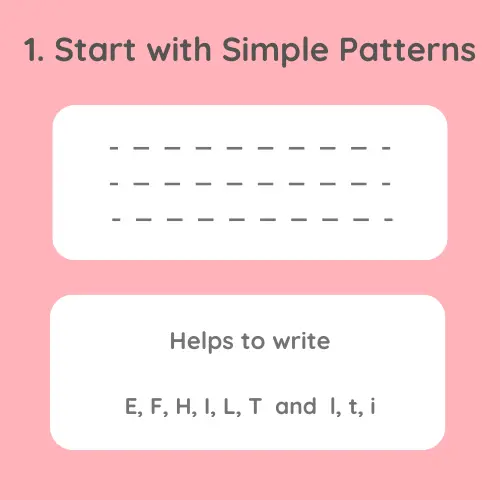


Together, these patterns prepare children to write capital and small letters and support other writing worksheets like shapes, mazes, and numbers
Explore others learning areas
Looking for gentle guidance beyond worksheets? Our parent guide to preschool writing worksheets shares how to use worksheets thoughtfully, how long to practise, and how to keep writing pressure-free — at any stage of your child’s learning.
Prefer everything and more in one download?
Choose a simple one-time download or a complete pre-writing bundle

Starter Pre-Writing Line Patterns Bundle
$0.99
A one-time download of all the line pattern worksheets shown above — bundled together for convenience
What it contains:
– 9 printable PDF worksheets
– Simple, directional, and curved line patterns
– Same worksheets shown above, in one download
Complete Pre-Writing Line Patterns Bundle
$4.99
Designed for ongoing pre-writing practice beyond basic line patterns
What it contains:
– All starter line pattern worksheets
– Additional levels and variations
– Structured practice for capital and small letters
– Designed for longer-term pre-writing support
Pre-writing tracing line pattern worksheets help preschool children develop the foundational skills needed for early writing. Before children begin forming letters and numbers, they need strong pencil control, hand strength, and fine motor coordination. Line tracing activities provide a simple, age-appropriate way to build these skills gradually. These printable pre-writing tracing worksheets introduce straight lines, curved lines, zigzags, loops, and mixed line patterns. Tracing different line directions supports left-to-right movement, visual tracking, and controlled hand motion, which are essential for writing readiness. Repeating these patterns helps children gain confidence and improve consistency without rushing into formal letter writing. As children become comfortable with basic line tracing, they naturally progress to more complex activities. Maze tracing worksheets encourage directional planning and problem-solving while strengthening pencil control. Shape tracing builds spatial awareness and prepares children for forming letters and numbers. These early steps make the transition to alphabet writing worksheets and number writing worksheets smoother and less challenging. Line pattern tracing worksheets also support early classroom learning and home practice. Short, regular practice sessions help children develop fine motor skills without fatigue or frustration. These activities can be used independently, during guided instruction, or as part of a broader preschool writing curriculum. Pre-writing tracing line patterns form the foundation of writing readiness activities for preschoolers. By starting with simple strokes and gradually increasing complexity, children build the control and confidence needed for alphabet writing, number writing, and early CVC word practice. These worksheets are designed to support steady skill development and prepare young learners for the next stages of writing.
When Should Children Start Pre-Writing Tracing?
Most preschool children are ready for pre-writing tracing activities between ages three and five, depending on hand strength and coordination. At this stage, children benefit from simple line patterns that encourage controlled movement rather than accuracy. Short sessions focused on tracing straight and curved lines help children develop endurance and confidence before introducing letters or numbers. As children show comfort with tracing lines, they can move on to maze worksheets and shape tracing activities. These steps prepare them for alphabet writing worksheets, number writing worksheets, and early CVC word writing. Allowing children to progress gradually helps build writing readiness without pressure or fatigue. If you are unsure on where to start, kindly read our parent guide for more clarity before beginning. Our link can be found above.